Showing posts with label philosophy. Show all posts

Introduction to Logic Review

Introduction to Logic
Average Reviews:

(More customer reviews)
For the beginner, there's no better book to begin one's excursion into logic, both deductive and inductive, formal and informal, syllogistic and mathematical, propositional as well as predicate calculus. There is excellent competition, such as Bates' Introduction to Logic and Lemmon's book by the same name. But these books are limited in their scope, and not always as didactic and insightful as the Copi work. This book is certainly not exhaustive of all logical norms and forms, but it is quite comprehensive. I know of no other book which is so thoroughly diversified in the treatment of all logical styles and methods, and which does so with greater clarity and elegance of style. I wish this had been my textbook upon taking formal logic courses years ago; it is clearly superior to literally dozens of others that are either too simplistic or over the head of most beginning logicians.

Click Here to see more reviews about: Introduction to Logic

Easy-to-read, visually appealing, and chock full of real-world applications, this most complete and authoritative book on introductory logic fully prepares users to understand, recognize, and apply classical syllogistic logic and the more powerful techniques of modern symbolic logic-explaining all concepts and techniques clearly, accurately, and thoroughly, and bringing them to life using a wealth of real-life examples of lively arguments and explanations drawn from a wide variety of sources to help demonstrate the application of logical principles by serious writers and thinkers trying to solve real problems in a wide range of fields.Includes full chapters on basic logical concepts, the uses of language, definitions, fallacies, categorical propositions, categorical syllogisms, arguments in ordinary language, symbolic logic, methods of deduction, quantification theory, analogy and probable inference, Mill's Methods of experimental inquiry, science and hypothesis, and probability. Reformulates key logical issues, and presents a more detailed account of the concept of logical equivalence, distinguishing it more clearly from the truth-functional connectives. Includes sidebars containing additional, enriching information; many new illustrations taken from contemporary research I the physical and biological science; and a plethora of exercises.For anyone searching for a top-notch, easy-to-understand introduction to logic.--This text refers to an out of print or unavailable edition of this title.

Buy Now

Click here for more information about Introduction to Logic

Read More...

The Elements of Moral Philosophy Review

The Elements of Moral Philosophy
Average Reviews:

(More customer reviews)
I teach college-level ethics and decided to give the Rachels text a try for one of my courses this semester. It being probably the most popular ethics text, I thought it surely would be at least adequate. It is not.
Pros: Rachels' section on cultural relativism is probably the best discussion of the topic in print. Use it as a pivotal reference. His sections on "Absolute Moral Rules" and "Kant and Respect for Persons" are solid, and his section "The Idea of Social Contract" is a decent discussion of an oft-slighted moral theory. He also includes a not-too-shabby discussion of feminist ethics.
Cons: I must list these.
1) Rachels' section on utilitarianism is extremely poor, hardly mentioning the very important distinction between Bentham and Mill over the object of utility or Bentham's "Calculus of Felicity" which is an extremely important utilitarian first-step.
2) In the section on utilitarianism and in a few other places (inexplicably), Rachels forgoes an adequate explanation of the theory at hand, instead choosing to discuss it in the context of an applied problem like euthanasia or homosexuality. In doing so, he tries to accomplish far too much in far to short a time without a foundation.
3) His section "Subjectivism in Ethics" is hopelessly muddled between the view that morality is up to individual tastes or doesn't exists at all, and proper metaethical concerns about the meaning of moral statements (propositions or expressions of emotion?). The two are actually separate matters, and regardless they cannot both be adequately covered in 16 4"x8" pages. Better to leave out some material than cover it badly.
4) The book is too expensive. $32 for a text that is the length of a short paperback novel is obscene. Of course, this is a systemic problem with academic texts, but I have to say something.
I would recommend Pojmans "Ethics: Discovering Right and Wrong" or Timmons "Conduct and Character" over this text. The Pojman text is a little slanted to the conservative right, but that can actually work well in that it can create positive tension upon which to discuss the core issues. And Pojman covers every base (and then some). Timmons has collected top-notch accessible primary source readings on moral theory, and so is another wise choice.

Click Here to see more reviews about: The Elements of Moral Philosophy

Firmly established as the standard text for undergraduate courses in ethics, this concise, lively book combines clear explanations of the main theories of ethics with discussions of interesting examples.Topics covered include famine relief, euthanasia, homosexuality, and the treatment of animals.The text's versatility allows it to be widely used not only in ethical theory courses, but also in applied ethics courses of all kinds. .

Buy Now

Click here for more information about The Elements of Moral Philosophy

Read More...

Approaches to Peace: A Reader in Peace Studies Review

Approaches to Peace: A Reader in Peace Studies
Average Reviews:

(More customer reviews)
I've used David Barash's _Approaches to Peace_ several times in my college classes on peace and justice. This is unusual in itself, because I rarely use anthologies, preferring instead to go straight to the original sources themselves. I like Barash's approach, though, because it tries to be inclusive as possible.
The anthology begins by looking at the definitions and possible causes of war, moves on to analyses of how to prevent war (negative peace), then to considerations of how to create structures of justice that eliminate the necessary conditions for war (positive peace). The rest of the book is devoted to readings that discuss nonviolence, religious pacifism, and historical peace movements. All of these general categories are exactly what one would want in a "peace studies" text.
The problem is that the readings included in each category aren't always the best (or at least aren't the ones I would've selected). The single best two sets of readings are in the chapters on positive peace and nonviolence. The single worst (and I do mean *worst*!) set of readings are when Barash deals with religious pacifism (it's as if he feels uncomfortable in this arena). In the section on peace movements, Vaclav Havel's essay is the single best piece, but one wonders why it (and perhaps the entire chapter) doesn't serve as the prologue to the anthology.
Still, no anthology perfectly pleases everyone. Barash's is the best one out there I've discovered. Perhaps some changes will be made in a second edition. Regardless, I highly recommend this book.

Click Here to see more reviews about: Approaches to Peace: A Reader in Peace Studies

Approaches to Peace provides a unique and interdisciplinary sampling of classic articles and short literary selections focusing on the diverse aspects of peace and conflict studies. Readings cover the causes of war and proposed means of preventing it, so called negative peace, and also reflect upon the universal concern for positive peace. The material examines nonviolence movements, peace movements, religious inspirations, and our future prospects for peace. Contributors include Johan Galtung, Kenneth Boulding, Elise Boulding, and Alva Mydral. Contemporary pieces by Jonathan Schell, Richard Falk, Betty Reardon, and Vaclav Havel, and timeless classics from Leo Tolstoy, the Bhagavad Gita, Martin Luther King, Jr., Gandhi, and Thoreau are included as well. The book's balanced and unbiased approach makes it easily adaptable to both general discussions of peace and conflict as well as the rapidly changing issues of the moment. Approaches to Peace is able to stand on its own as a foundation text in any introductory peace studies course. It is also compact enough to use as a supplement with more specialized readings, allowing instructors to assign additional readings consistent with their own particular orientation. Each selection is prefaced by a short introduction highlighting the author's background, the work's historical context, and the selection's significance in terms of the "big picture." Study questions and a list of suggested readings at the end of each selection also provide a useful resource for students.

Buy Now

Click here for more information about Approaches to Peace: A Reader in Peace Studies

Read More...

Candide Review

Candide
Average Reviews:

(More customer reviews)
Ever since philosophers began thinking about the meaning of life, a favorite question has been "Why do bad things happen to good people?". In Voltaire's day, this issue was primarily pursued either from the perspective of faith (everything that happens is God's will and must be for Divine purpose) or of reason (What do these events mean to you, as you interpret them subjectively?). Infuriated by the reaction by some members of the church to a horrible loss of life from an earthquake in Lisbon, Voltaire wrote this hard-biting satire of the human condition to explore these questions.
Before reading further, let me share a word of caution. This book is filled with human atrocities of the most gruesome sort. Anything that you can imagine could occur in war, an Inquisition, or during piracy happens in this book. If you find such matters distressing (as many will, and more should), this book will be unpleasant reading. You should find another book to read.
The book begins as Candide is raised in the household of a minor noble family in Westphalia, where he is educated by Dr. Pangloss, a student of metaphysical questions. Pangloss believes that this is the best of all possible worlds and deeply ingrains that view into his pupil. Candide is buoyed by that thought as he encounters many setbacks in the course of the book as he travels through many parts of Europe, Turkey, and South America.
All is well for Candide until he falls in love with the Baron's daughter and is caught kissing her hand by the Baron. The Baron immediately kicks Candide out of the castle (literally on the backside), and Candide's wanderings begin. Think of this as being like expulsion from the Garden of Eden for Adam. Soon the penniless Candide finds himself in the Bulgarian army, and receiving lots of beatings while he learns to drill.
The story grows more far-fetched with each subsequent incident. To the casual reader, this exaggeration can seem unnecessary and annoying. It will remind you of the most extreme parts of Swift in Gulliver's Travels and Rabelais in Gargantua and Pantagruel. But subtly, Voltaire is using the exaggeration to lure the reader into making complacent judgments about complacency itself that Voltaire wants to challenge. The result is a deliciously ironical work that undermines complacency at a more fundamental level than I have seen done elsewhere. Basically, Candide challenges any view you have about complacency that is defined in terms of the world-view of those who are complacent.
Significant changes of circumstances (good and ill) occur to all of the members of the Baron's household over the course of the story. Throughout, there is much comparing of who has had the worst luck, with much feeling sorry for oneself.
That is the surface story. Voltaire is, however, a master of misdirection. Beneath the surface, Voltaire has another purpose for the book. He also wants to expose the reader to questioning the many bad habits that people have that make matters worse for everyone. The major themes of these undercurrents are (1) competing rather than to cooperating, (2) employing inhumane means to accomplish worldly (and many spiritual) ends, (3) following expected rules of behavior to show one's superiority over others that harm and degrade others, (4) focusing on money and power rather than creating rich human relationships, (5) hypocritical behavior, and (6) pursuing ends that society approves of rather than ends that please oneself.
By the end of the story, the focus shifts again to a totally different question: How can humans achieve happiness? Then, you have to reassess what you thought about the book and what was going on in Voltaire's story. Many readers will choose to reread the book to better capture Voltaire's perspective on that final question, having been surprised by it.
Candide is one of my favorite books because it treats important philosophical questions in such an unusual way. Such unaccustomed matching of treatment and subject matters leaves an indelible impression that normal philosophical arguments can never match. Voltaire also has an amazing imagination. Few could concoct such a story (even by using illegal substances to stimulate the subconscious mind). I constantly find myself wondering what he will come up with next. The story is so absurd that it penetrates the consciousness at a very fundamental level, almost like doing improvisation. In so doing, Voltaire taps into that feeling of "what else can happen?" that overcomes us when we are at our most pessimistic. So, gradually you will find yourself identifying with the story -- even though nothing like this could ever happen to you. Like a good horror story, you are also relieved that you can read about others' troubles and can put your own into perspective. This last point is the fundamental humanity of the story. You see what a wonderful thing a kind word, a meal, or a helping hand can be. That will probably inspire you to offer those empathic actions more often.
After you have finished Candide, I suggest that you ask yourself where complacency about your life and circumstances is costing you and those you care about the potential for more health, happiness, peace, and prosperity. Then take Voltaire's solution, and look around you for those who enjoy the most of those four wonderful attributes. What do those people think and do differently from you?


Click Here to see more reviews about: Candide


Buy Now

Click here for more information about Candide

Read More...

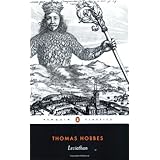
Leviathan (Penguin Classics) Review

Leviathan (Penguin Classics)
Average Reviews:

(More customer reviews)
I finished reading Leviathan a couple months ago, but cringed every time I thought about writing a review. The book is large at over 700 pages and covers so much ground, a review would have to be a book in itself to do it justice. Due to Leviathan's philosophical content and somewhat antiquated language, it's very slow going. Each page needs time to digest.
So I'm not going to bother writing a real review. I will just say that Leviathan is a 5-star classic and worth your time, if you can deal with reading political philosophy. Hobbes divides the work into four major sections:
Of Man, in which he discusses human nature and why civilized people prefer peace to war. Here Hobbes establishes the primary reason that people form a government to rule over them: to safeguard them from enemies, both external and internal.
Of Common-wealth, in which Hobbes first talks about the several forms of government and the pros and cons of each. He then explains the rights that a government has over its people; according to Hobbes, the government can do pretty much anything it wants to. Finally he goes into the things that tend to weaken or dissolve a government.
Of a Christian Common-wealth, the longest section, in which Hobbes accepts the Bible as the word of God and quotes from it numerous time to bolster his position in support of a powerful government.
Of the Kingdome of Darknesse, the shortest and strangest section, in which Hobbes veers away from the topic of government and instead focuses on religious practices and beliefs of the day that he deems improper and inconsistent with the Bible.
It took me months to read this, but I came away with great respect for Hobbes and a better understanding of politics. I can't say that I agree with everything I read, but I think the majority of his arguments are sound and convincing.
Five stars, no doubt in my mind. But it's a dive into the deep end, so you'll probably only finish it if you really appreciate and enjoy philosophical discussion!

Click Here to see more reviews about: Leviathan (Penguin Classics)

The Leviathan is the vast unity of the State. But how are unity, peace and security to be attained? Hobbes' answer is sovereignty, but the resurgence of interest today in Leviathan is due less to its answers than its methods. Hobbes sees politics as a science capable of the same axiomatic approach as geometry: he argues from first principles to human nature to politics. This book's appeal to the twentieth century lies not just in its elevation of politics to a science, but in its overriding concern for peace.

Buy Now

Click here for more information about Leviathan (Penguin Classics)

Read More...

The Chomsky-Foucault Debate: On Human Nature Review

The Chomsky-Foucault Debate: On Human Nature
Average Reviews:

(More customer reviews)
Noam Chomsky and Michel Foucault are arguably two of the most influential thinkers of the late twentieth century - important contributors to Western intellectual history. Despite their significance, however, this small text has limited value. It is a hodgepodge of loosely related and previously published material much of which is available on line for free.
The book, as its title suggests, is notionally centered on the 1971 Dutch Television debate between Chomsky and Foucault moderated by Edlers on the question of whether or not there such a thing as an "innate" human nature. While the `debate' is largely an exercise in the two protagonists talking past each other; it is nonetheless an interesting small episode in contemporary intellectual history. The video and transcript have been available on-line for years. Had the remainder of the text been post-debate reflections or new analysis of the issues raised in the discussion the text could have been quite interesting. Sadly, this is not the case.
The remaining four essays are transcripts of interviews and presentations by Foucault and Chomsky on other subjects - Chomsky does offer a few small asides on the debate at the end of one interview. The two chapters on Chomsky are transcripts of 1976 interviews with Ronat. `The Philosophy of Language' is a collection of Chomsky's musings on the modern intellectual project while `Politics' provides a feel for his well known political views which range from insightful reflections on the nature and function of societal power structures to his more fringe conspiracy-type views. While interesting small pieces they have been previously published and have only a tenuous link to the earlier debate.
Michel Foucault's `Truth and Power' is a transcript of an interview with Fontana and Pasquino in the mid 70s that focuses on the evolution and focus of Foucault's thought. While "Omnes et Singulatim: Toward a Critique of Political Rason is based on lectures Foucault gave at Stanford in the 80s discussing power and reason in modern society (available on line). Again these are fine small pieces, however, in the current text they feel like filler.
Chomsky and Foucault are important and interesting thinkers. That said, I do not see the value of this text. Some original analysis of their debate could have been interesting.

Click Here to see more reviews about: The Chomsky-Foucault Debate: On Human Nature

Two of the twentieth century's most influential thinkers debate a perennial question.In 1971, at the height of the Vietnam War and at a time of great political and social instability, two of the world's leading intellectuals, Noam Chomsky and Michel Foucault, were invited by Dutch philosopher Fons Edlers to debate an age-old question: is there such a thing as "innate" human nature independent of our experiences and external influences?The resulting dialogue is one of the most original, provocative, and spontaneous exchanges to have occurred between contemporary philosophers, and above all serves as a concise introduction to their basic theories. What begins as a philosophical argument rooted in linguistics (Chomsky) and the theory of knowledge (Foucault), soon evolves into a broader discussion encompassing a wide range of topics, from science, history, and behaviorism to creativity, freedom, and the struggle for justice in the realm of politics.In addition to the debate itself, this volume features a newly written introduction by noted Foucault scholar John Rajchman and includes additional text by Noam Chomsky.

Buy Now

Click here for more information about The Chomsky-Foucault Debate: On Human Nature

Read More...

Thinking about Mathematics: The Philosophy of Mathematics Review

Thinking about Mathematics: The Philosophy of Mathematics
Average Reviews:

(More customer reviews)
Anybody who's interested in why mathematics might have the least bit to do with philosophy will be interested in this book. To many the philosophy of mathematics may seem too specialized and peripheral to be of much interest. But such is not the case. The philosophy of math is intricately intertwined with many of the classic epistemological questions that I have never seen satisfactory answers to. This book will force you to think about things you have never considered before. Why does mathematics 'just happen' to describe empirical studies so well if mathematics is solely logical and in the head? Or is mathematics empirical and merely charading as necessary logical truth? These questions will be brought up in the book and the different answers given from the different philisophical sides.
Some of the book is a little dense and may be skimmed. He does go into detail a bit much in some places and the non technical reader will be lost. But Shapiro usually does do a good job of summarizing complex thoughts.
This book whetted my appetite for more and I plan on continuing thinking about these things and hopefully take some classes in mathematical logic and philosophy.

Click Here to see more reviews about: Thinking about Mathematics: The Philosophy of Mathematics

This unique book by Stewart Shapiro looks at a range of philosophical issues and positions concerning mathematics in four comprehensive sections. Part I describes questions and issues about mathematics that have motivated philosophers since the beginning of intellectual history. Part II is an historical survey, discussing the role of mathematics in the thought of such philosophers as Plato, Aristotle, Kant, and Mill. Part III covers the three major positions held throughout the twentieth century: the idea that mathematics is logic (logicism), the view that the essence of mathematics is the rule-governed manipulation of characters (formalism), and a revisionist philosophy that focuses on the mental activity of mathematics (intuitionism). Finally, Part IV brings the reader up-to-date with a look at contemporary developments within the discipline. This sweeping introductory guide to the philosophy of mathematics makes these fascinating concepts accessible to those with little background in either mathematics or philosophy.

Buy Now

Click here for more information about Thinking about Mathematics: The Philosophy of Mathematics

Read More...

Plato: Apology (Greek Edition) Review

Plato: Apology (Greek Edition)
Average Reviews:

(More customer reviews)
This book was wonderfully organized for those who would like to read ancient Greek texts. We can read Plato's Apology without looking up the Greek dictionary. In the appendices, some Sentence Diagrams,table of the tense of the verbs of the Principal Parts, Word Frequency List, and the Vocabulary List were provided.

Click Here to see more reviews about: Plato: Apology (Greek Edition)

The revised edition of this popular textbook features revised vocabulary and grammatical notes that now appear on the same page as the text, sentence diagrams, principal parts of verbs listed both by Stephanus page and alphabetically, word frequency list for words occurring more than twice, and complete vocabulary.Also available:Meleager: The Poems - ISBN 0865162549Asclepiades of Samos and Leonidas of Tarentum: The Poems - ISBN 0865164568For over 30 years Bolchazy-Carducci Publishers has produced the highest quality Latin and ancient Greek books. From Dr. Seuss books in Latin to Plato's Apology, Bolchazy-Carducci's titles help readers learn about ancient Rome and Greece; the Latin and ancient Greek languages are alive and well with titles like Cicero's De Amicitia and Kaegi's Greek Grammar. We also feature a line of contemporary eastern European and WWII books. Some of the areas we publish in include: Selections From The Aeneid Latin Grammar & Pronunciation Greek Grammar & Pronunciation Texts Supporting Wheelock's Latin Classical author workbooks: Vergil, Ovid, Horace, Catullus, Cicero Vocabulary Cards For AP Selections: Vergil, Ovid, Catullus, Horace Greek Mythology Greek Lexicon Slovak Culture And History

Buy Now

Click here for more information about Plato: Apology (Greek Edition)

Read More...

Plato and the Socratic Dialogue: The Philosophical Use of a Literary Form Review

Plato and the Socratic Dialogue: The Philosophical Use of a Literary Form
Average Reviews:

(More customer reviews)
This is one of the best books on Plato that I have read. Kahn's thesis--that Plato's early and middle dialogues present a unified philosophical vision that is gradually revealed from dialogue to dialogue (what Kahn calls the "ingressive method")--is a new twist on the unitarian thesis that the Platonic corpus gives no evidence for the sort of philosophical development that has been spotted by interpreters such as Grote, Campbell, Vlastos, Owen, and many others (probably most others, in fact). But even if one is a developmentalist at heart, one can benefit greatly from reading this book. The approach is both philosophical and scholarly, of use both to the philosopher and to the classicist. Even when it is difficult to agree with Kahn (for example, he holds that the Gorgias is an earlier work than the Protagoras, in spite of what appears to be a more complex moral psychology and a more sensitive treatment of the hedonist thesis in the former), grappling with his arguments can be both a challenge and a thrill. Rarely does disagreement serve to educate so well.
It is disappointing, though fully understandable, that this book does not treat the late dialogues. There are hints here and there that Kahn thinks he could extend his thesis further, but his treatment of the Pheadrus in the last chapter is more promisory than productive.

Click Here to see more reviews about: Plato and the Socratic Dialogue: The Philosophical Use of a Literary Form

This book offers a new interpretation of Plato's early and middle dialogues as the expression of a unified philosophical vision. Whereas the traditional view sees the dialogues as marking successive stages in Plato's philosophical development, we may more legitimately read them as reflecting an artistic plan for the gradual, indirect and partial exposition of Platonic philosophy. The magnificent literary achievement of the dialogues can be fully appreciated only from the viewpoint of a unitarian reading of the philosophical content.

Buy Now

Click here for more information about Plato and the Socratic Dialogue: The Philosophical Use of a Literary Form

Read More...

Plato's Symposium: Greek Text with Facing Vocabulary and Commentary Review

Plato's Symposium: Greek Text with Facing Vocabulary and Commentary
Average Reviews:

(More customer reviews)
I bought this because I was so impressed with the Herodotus Book 1 in the same series. This is perfect too!
It is wonderful to have all the notes and vocabulary opposite the text. Everything that you need to read Plato successfully is in one volume.
This is also a beautifully produced book. It is a pleasure to handle it. The typefaces are all clear and easy to read. I shall certainly buy any more texts that are produced in this series.

Click Here to see more reviews about: Plato's Symposium: Greek Text with Facing Vocabulary and Commentary

Facing each of the 72 pages of John Burnet's Greek edition of Plato's Symposium (originally published by Oxford University Press in 1905) is a single page of corresponding vocabulary and intermediate level grammatical commentary. Once readers have memorized the core vocabulary list, they will be able to read the classical Greek and consult all relevant vocabulary and commentary without turning the page.

Buy Now

Click here for more information about Plato's Symposium: Greek Text with Facing Vocabulary and Commentary

Read More...

The Philosophy of Language Review

The Philosophy of Language
Average Reviews:

(More customer reviews)
Anyone serious about meaning in language should read these articles. They provide a baseline on which all other work builds. Whether you are interdisciplinary or only care about linguistics, philosophy, artificial intelligence or cognition, this book is one must-read paper after another.
I used it for both my graduate semantics and undergraduate philosophy of language classes at Carnegie Mellon. You can read these papers on your own -- they're actually very accessible for papers on philosophy and do not require any prior logical background (though an intro to logic would surely help). Taken together, this book is the perfect basis for a quarter, semester or whole year of philosophy of language.
The book's organized into sections on Truth and Meaning (Quine's classic paper on empiricism, Church on intensionality, Davidson and Strawson on truth and Tarski on semantics), Speech Acts (Austin on Performatives, Searle on Speech Acts, Grice on cooperation), Reference and Descriptions (Frege on sense and reference, Russell on denoting and descriptions with Strawson's reply on referring), Names and Demonstratives (Kripke on Naming and necessity and Putnam on meaning and reference), Propositional attitudes (Quine and Kaplan on quantifiers, Davidson and Kripke on propositional content, and Barwise and Perry on situation semantics), Metaphor (Davidson's classic paper, though I believe the second edition contained Searle's excllent paper on metaphor), Interpretation (Quine on meaning and Searle on indeterminancy), and the Nature of Language with what's left (Wittgenstein and Kripke on privacy, and Chomsky on semantic innateness).

Click Here to see more reviews about: The Philosophy of Language

What is meaning? How is linguistic communication possible? What is the nature of language? What is the relationship between language and the world? How do metaphors work? The Philosophy of Language, considered the essential text in its field, is an excellent introduction to such fundamental questions. This revised edition collects forty-one of the most important articles in the field, making it the most up-to-date and comprehensive volume on the subject. The fourth edition features several new articles including influential work by Bertrand Russell, John R. Searle, John Perry, Ruth Garrett Millikan, and John Stuart Mill. Other selections include classic articles by such distinguished philosophers as Gottlob Frege, P. F. Strawson, J. L. Austin, Hilary Putnam, and David Kaplan.The selections represent evolving and varying approaches to the philosophy of language, with many articles building upon earlier ones or critically discussing them. Eight sections cover the central issues: Truth and Meaning; Speech Acts; Reference and Descriptions; Names and Demonstratives; Propositional Attitudes; Metaphor; Interpretation and Translation; and The Nature of Language. The revised general introduction and introductions to each section give students background to the issues and explain the connections between them. A list of suggested further reading follows each section.

Buy Now

Click here for more information about The Philosophy of Language

Read More...